Zeit gegen Rassismus 2022
Antirassistisches Engagement in der Öffentlichkeit, im Programm von Radio X und in Kooperation mit Partnerorganisationen
Dank der finanzellen Unterstützung der kantonalen Fachstelle für Diversität und Intergration und der eidgenössischen Fachstelle für Rassismusbekämpfung setzt Radio X ab Mitte März 2022 die Zeit gegen Rassismus um. Verteilt übers ganze Jahr laden wir zu öffentlichen Veranstaltungen und Aktionen ein, setzen uns in Radiosendungen mit Diversität und respektvollem Handeln auseinander und - last but not least - bieten Partnerorganisationen finanzielle, technische und beraterische Unterstützung an.


23. Juni um 18.30 Uhr: Radio X lädt zur Podiumsdiskussion "Rassismus und Schule" ein
Was unternimmt eigentlich die öffentliche Volksschule gegen Rassismus? Auch im Klassenzimmer, auf dem Pausenplatz und Schulweg ist Rassismus präsent. Gibt es Rassismusprävention an den Basler Schulen? Wie werden Kinder und Jugendliche bei uns über Antirassismus und Diversität geschult?
In Form eines öffentlichen Podiums diskutiert der Moderator Bernard Senn mit spannenden Gästen:
Alexandra Binnenkade (Historikerin, PZ.BS)
Emanuel Brito (Primarlehrer Gotthelf)
sowie einem Inputreferat von Mandy Abou Shoak (Soziokulturelle Aktivistin)
und Stimmen von Schüler:innen der SEK Leonhard
in der Mensa des Gymnasiums Leonhard, Kohlenberg 17, 4051 Basel
Türöffnung um 18.00 Uhr, Talk von 18.30 Uhr bis ca. 20.30 Uhr mit anschliessendem Apéro. Der Eintritt ist frei.
Bitte melde dich an bei janina.labhardt@radiox.ch.
19. März um 20 Uhr: Veranstaltung zu Awareness in der Clubkultur
Viele Veranstaltende und Clubs sind sich einig: Es braucht mehr Awareness in der Nachtkultur. Erste Bemühungen werden auch schon gemacht, um an Festivals und in Clubs einen "Safe Space", also einen sicheren Ort für alle zu schaffen. Doch wie einfach ist dies tatsächlich umzusetzen? Welche Methoden und Instrumente gibt es?
Radio X lädt am 19. März um 20 Uhr zu einer Gesprächsrunde und zu einem Erfahrungsaustausch unter Veranstaltenden und Nachtkulturkonsument:innen in der Kaserne Basel ein.
Podiumsgäste:
Gizem Adiyaman aka Meg10 (Ex-Hoe_mies) – DJ, Podcasterin, Veranstalterin von queer- feministischen Partys
Kelly Tuke – Event Host, Zentralwäscherei ZH & Awareness Expertin
KA-RABA – Okra Collective
Marcel Bisevic – Leiter Musik Kaserne Basel
Moderation: Danielle Bürgin (Programmleitung Kultur und Musik, Radio X)
Im Anschluss an die Diskussion legen die DJs Meg10 (Berlin) & Apinti (Okra Collective, Basel) auf. Der Eintritt zur Podiumsdiskussion ist frei.
Radio X kooperiert mit zahlreichen Partnerorganisationen
Wir haben Vereine, Organisationen und Institutionen eingeladen, sich an der Woche gegen Rassismus zu beteiligen und einen Beitrag in den Bereichen Diskriminierung, Rassismus und Zivilcourage zu leisten. Für gute Projekte konnte Radio X eine finanzielle, technische und beraterische Unterstützung gewähren. Die Eingaben werden auf Grundlage der Kriterien und des präsentierten Vorhabens ausgewählt.
Für die Durchführung und Organisation der Projekte ist die Trägerschaft zuständig. Hier findest du den Programmkalender, wer sich wann, wo und mit welchem Schwerpunkt antirassistisch engagiert.
.jpg/jcr:content/rx-zgr-2022-web-01%20(002).jpg)
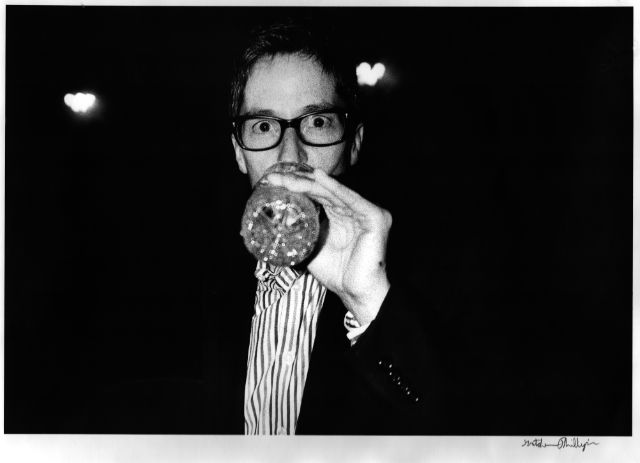
Radikal liebend: Alison Bechdels Kampf um Repräsentation
Die Cartoonistin zeichnet das alltägliche Leben queerer Menschen - und gilt dafür als radikal. In einem Klima zunehmender Homo- und Transphobie sei es aber wichtiger denn je, solidarisch zu sein. Das Cartoonmuseum Basel widmet der amerikanischen Ikone eine Retrospektive: Alison Bechdel. The Essential ist noch bis zum 26. Oktober 2025 zu sehen. von Mirco Kaempf
25.07.11 Alison Bechdel
I apologize if this is an old question, but: back in 1985, how many films you watched at that time would actually pass the Bechdel Test?
Alison Bechdel:
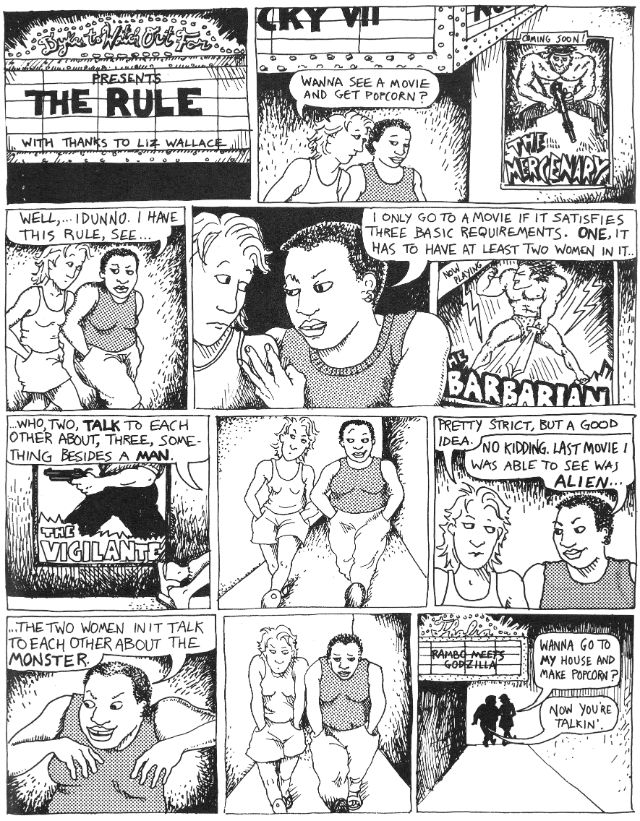
Not very many. In fact, in the comic strip that this test is based on, there is only one movie that passes, and it is Alien, because there are two women in the movie who talk to each other about not a man — but the monster. I did... I love Alien.
_________
Der "Bechdeltest" stammt aus einem Comicstrip von Alison Bechdel aus dem Jahr 1985, indem eine lesbische Frau ihre Regel erklärt, was es braucht, dass sie einen Film schauen geht:
-
Gibt es mindestens zwei weibliche Figuren,
-
die miteinander sprechen –
-
und zwar über etwas anderes als einen Mann?
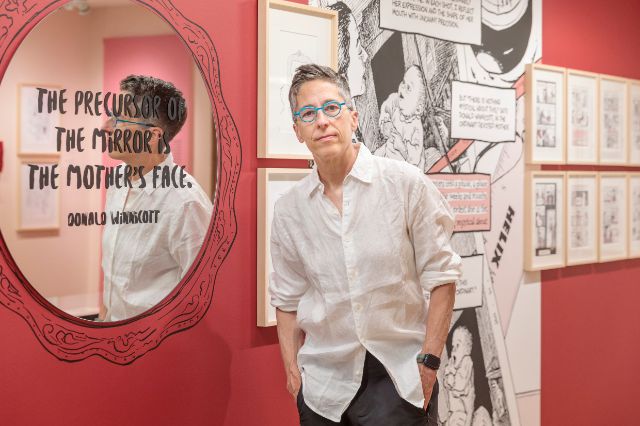
Der Witz war so klug und treffsicher, dass daraus später ein popkulturelles Barometer für Diversität in der Filmwelt wurde. Doch wer sich die aktuelle Ausstellung „Alison Bechdel – The Essential“ im Cartoonmuseum anschaut, merkt schnell: Alison Bechdel ist weit mehr als nur die Schöpferin dieses Tests.
Der erwähnte Comicstrip stammt aus der Serie Dykes to Watch Out For, die Bechdel rund 25 Jahre lang zeichnete. Darin erzählt sie mit Witz, Feingefühl und politischer Schärfe vom Alltag queerer Frauen – mal banal, mal satirisch, immer zutiefst menschlich. In der Ausstellung sieht man, wie sie zunächst einzelne Panels zeichnete, später ganze Graphic Novels.
Nowadays the Bechdel Test is cited as a standard for evaluating representation in film. And originally it was just a joke you made, based on Virginia Woolf’s lectures-turned-book — A Room of One’s Own from 1929. Now fast forward to 2025, where U.S. policymakers are taking away the option for a third gender on passports, and there’s this new wave of oppression. Do you think things have really changed in the struggle against patriarchy? Or why do things keep staying the same?
Why do they keep being the same? I don’t know. I feel like there has been tremendous progress. To a certain extent, it’s because of that progress that we’re seeing this really quite psychotic backlash.
We’ve made a more inclusive country — in a wonderful way — for so many people. And the right is using that... as a weapon. They're falsely claiming that this is taking something away from straight white people. The fact that other people are allowed to have lives and subjectivities too is somehow unbearable to them.
It’s not really, of course. It’s just a political strategy that people have used forever to divide others.
There are also right-leaning characters in your recent comics. Why do you think some of these people don’t realize they’re actually worse off under the governance they support?
I don’t know. I’ve been wondering about that for my entire adult life. The answer is that they are being brainwashed. I know that sounds extreme, but I really think it’s true. They’re subjecting themselves to 24/7 right-wing news sources, which are flagrantly lying to them and telling simplistic, appealing stories — blaming whatever little troubles they’re having on gay people or immigrants.
Let's talk about representation. I saw an interview you did with the Young Vic, and you mentioned the photographer Joan E. Biren who documented lesbian women. You said that before she did self-portraits, she had never even seen an image of a lesbian woman.
When you started out, you said you just drew the things you wanted to see — things your friends probably wanted to see, too. Did that take a lot of courage?
No, it didn’t. I mean, I had nothing at stake. I was young. I was very committed to being out, given my own family situation — I had this closeted gay father who ended up killing himself. I could see how destructive it is to keep secrets about yourself.
So no, it didn’t feel brave. It just felt like, this is what I have to do. At the time it felt safe — like, no one was seeing it. It was only a small group of lesbians and maybe a few gay men who were even seeing this stuff. So it wasn’t perceived as a real threat at the time.
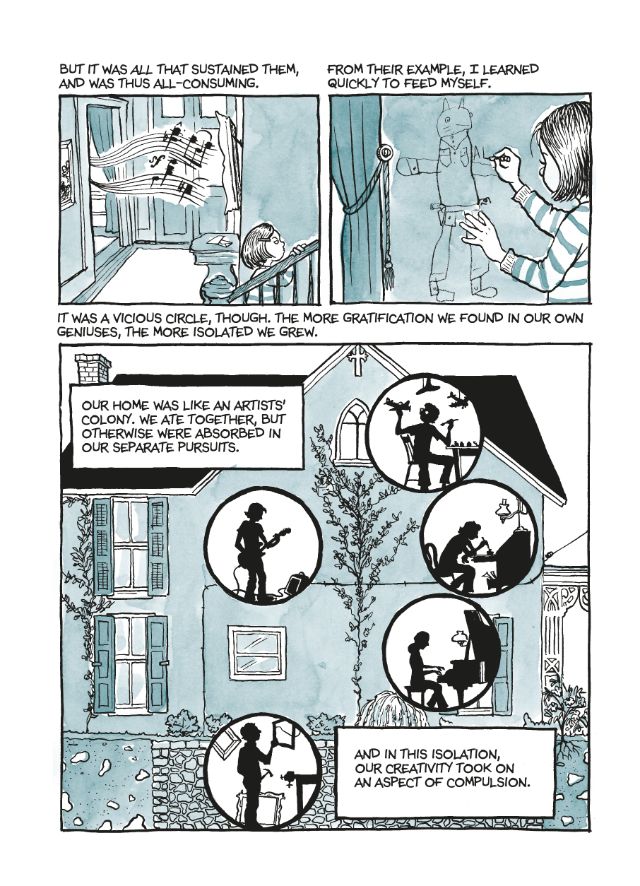
Dazu gehört das bekannte Buch Fun Home, in dem sie ihre eigene Vergangenheit aufarbeitet. Bechdel wuchs in den 1960er-Jahren in einem emotional distanzierten Elternhaus auf, das zugleich ein kleines Bestattungsunternehmen betrieb. Im Jahr 1980, vier Monate nachdem sie sich mit 19 bei ihren Eltern als lesbisch geoutet hatte, nahm sich ihr Vater das Leben. Nach dem Coming-Out erfuhr sie, dass auch er schwul war. Bechdel sagt dazu später nüchtern: „He was gay, and I was gay. He killed himself and I became a lesbian cartoonist.“
Rückblickend verbindet sie mythologische Sagen mit persönlichen Erinnerungen, so vergleicht sie den Akt, wie ihr Vater sie als Kind in die Luft hob mit der Geschichte von Ikarus, der von seinem Vater Flügel geschenkt kriegte, und dann zu Boden stürzte. Auch finden Referenzen zu James Joyce, Albert Camus oder Virginia Woolf, immer wieder statt.
Wer versucht, in der Ausstellung einen Bogen von 1929 über 1985 bis ins Jahr 2025 zu schlagen, wird nachdenklich: Warum gibt es immer noch – oder wieder – so viel Homo- und Transphobie?
Alison Bechdel sieht darin eine politische Strategie der Rechten, besonders in den USA, wo trans Personen derzeit gezielt ihrer Rechte beraubt werden. Fortschritte in Sachen Inklusion führen – so Bechdel – zu einem „psychotischen Backlash“, weil eine offenere Gesellschaft von einigen als Bedrohung empfunden wird. Deshalb, sagt sie, reicht es heute nicht mehr, nur still dazustehen – wir müssen aktiv solidarisch sein.
Would you say that in times like these, we have to speak up — or else we’re complicit?
Yeah, I guess that’s true. I feel like we’re all really being tested. It’s been easy to be out as a gay person — even as a trans person — for some time in this country, in the U.S.
But it’s going to get more difficult, and that’s going to require more personal courage. We’ll have to see how everyone does. The important thing is always solidarity — because the more of us who do it, the easier it is for everyone.
That’s the critical part: to get everyone, across all these identities, to join in. Yes, as a man, you should. Yes, support the women.
From what I understand, you didn’t get into certain colleges, (but you got into others) — and you’ve been drawing since you were small. You’ve kind of grown up in this DIY culture, with a sense of community and collective effort, which you said is so important today. Would you consider yourself a punk?
It’s funny — when I was in college, there was this little gang of punk students who were so cool and so beautiful, and I admired them so much. But it never occurred to me that I could be a punk.
I don’t think I have it in me — there’s something missing in my makeup. But I do, yes, share many of those aesthetic principles.
I haven’t found much on this — what kind of music are you into?
You know, I’m sorry to say that I don’t listen to a lot of music. And when I do, it’s almost always classical [...] I have very... bland tastes. I love Bach!
Neben Dykes to Watch Out For und Fun Home gibt die Ausstellung auch Einblick in weitere Werke: Are You My Mother? (2012), The Secret to Superhuman Strength (2021) und das neueste Buch SPENT. In letzterem tauchen Figuren aus ihren frühen Comics wieder auf – nun älter, wie sie selbst, in ihren Sechzigern. Eine von ihnen betreibt nun eine Ziegenfarm.
Über ihre Anfänge sagt Bechdel, sie wollte einfach Comics zeichnen, in denen sich ihre eigene Community wiederfinden konnte – ein Stück Repräsentation in einer Welt, die oft repressiv und sexistisch war (und ist).
Am Ende findet sie einfache, aber kraftvolle Worte. Eine Haltung, die politisch überlebenswichtig bleibt: "just keep drawing".
So — your retrospective here in Basel — the word “retrospective” always has a finite ring to it. It’s your body of work, everything displayed...
Yes, it does. I hope not. It’s unnerving to see that word “retrospective” and then see all this work organized in these lovely little rooms.
It does make me worry — is this the end? Can we now just put the lid on it and I’m done?
But I certainly hope not. I want to keep drawing. That’s what I always say to people who ask me for advice: just keep drawing.
Verwandte Artikel
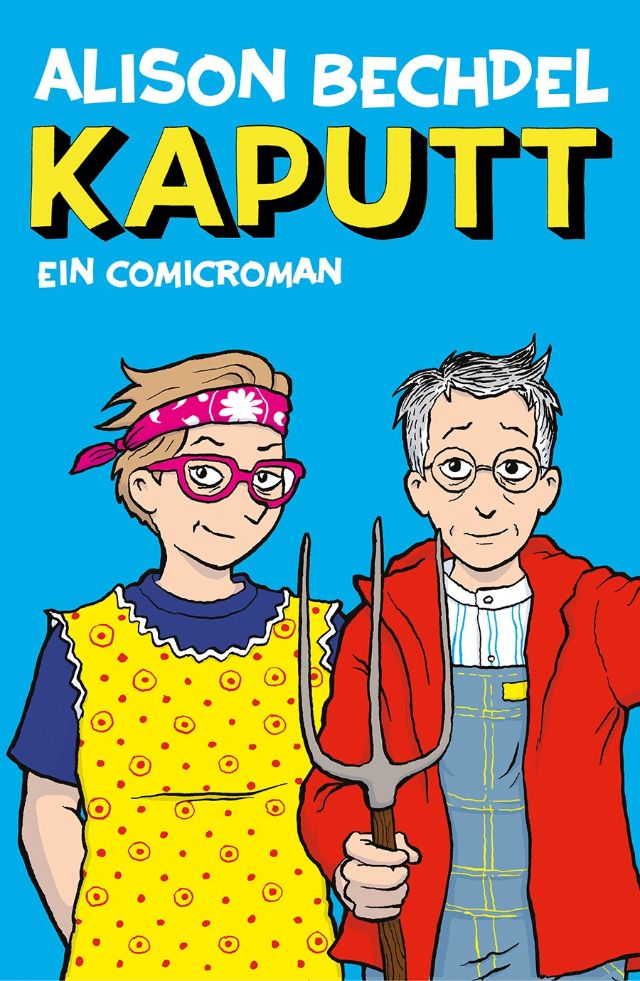
Das moralisch-kapitalistische Leben von Alison Bechdel auf der Ziegenfarm
In ihrem kürzlich auf deutsch übersetzten Comicbuch Kaputt geht es um mehrere grosse Themen: Wie sieht queeres Altern aus, wenn die Community zusammenhält? Wie lassen sich künstlerische Arbeit und politisches Bewusstsein verbinden? Und wie bringt man moralische Ansprüche mit dem Alltag in einer kapitalistischen Welt unter einen Hut? Das ist liebevoll und witzig gemacht, erschienen im März via dem Reprodukt Verlag.
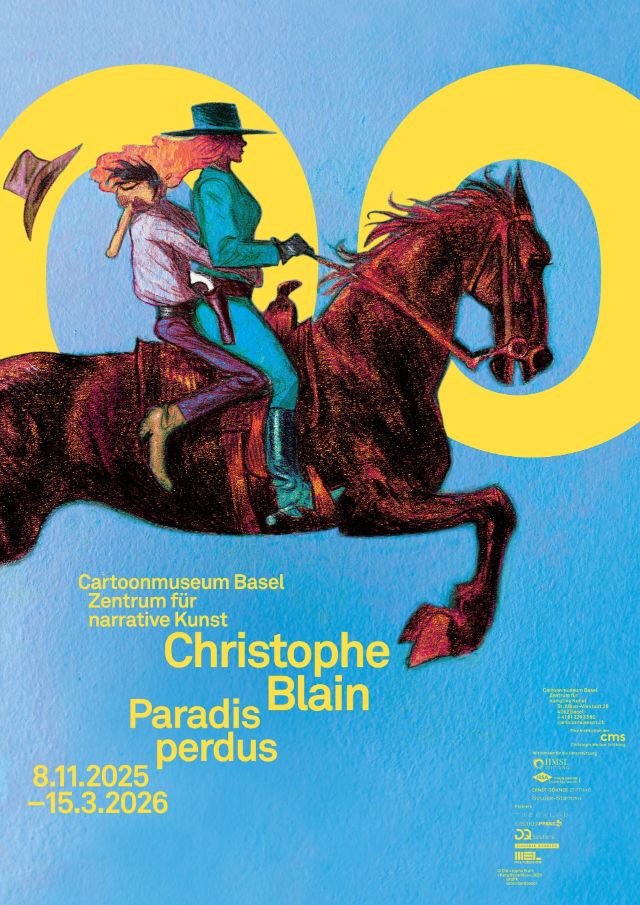
Paradiese im Cartoonmuseum Basel : Christophe Blain. Paradis Perdus
Mit Comics wie dem Western «Gus», «Isaac le pirate» oder auch der Politsatire «Quai D’Orsay» hat sich Christophe Blain in den letzten Jahrzehnten einen Namen gemacht. Sein letzter Comic «Le Monde Sans Fin» ist in Zusammenarbeit mit dem Energie- und Klimaexperten Jean-Marc Jancovici entstanden und beschäftigt sich mit der Klimaerhitzung. Nun findet im Cartoonmuseum die Ausstellung «Paradis Perdus» zum 55-jährigen Künstler aus Gennevilliers statt. Mehr dazu erfährst du in diesem Beitrag.
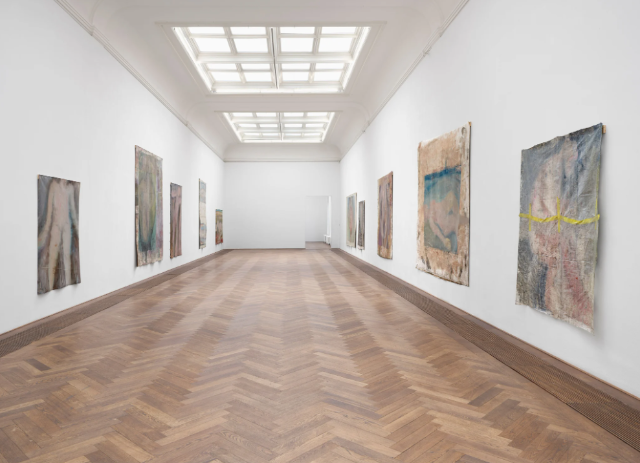
Zwischen Traum und Wirklichkeit
In ihrer Ausstellung Of my Life in der Kunsthalle Basel verwischt Ser Serpas die Grenze zwischen Traum und Realität: grossformatige Malereien, schemenhafte Körper, Wiederholungen und Spiegelungen schaffen eine Atmosphäre des Entrückten.
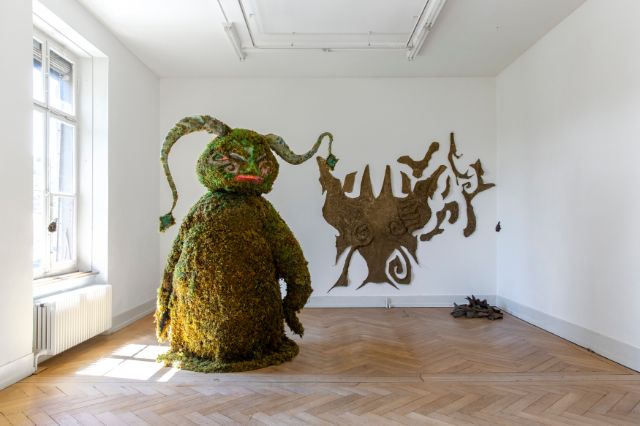
Zwischen Moos, Latex und Wut
In der Ausstellung Eat My Anger in der Kunsthalle Palazzo in Liestal geht es nicht ums Anschauen, sondern ums Eintauchen. Die Künstlerin Livia Rita erschafft darin emotionale Welten, die sich mit allen Sinnen erfahren lassen. Ausgangspunkt der Ausstellung sind sechs Songs ihrer noch unveröffentlichten EP Dystopia Wetlands und die Gefühle, die diese Songs tragen.
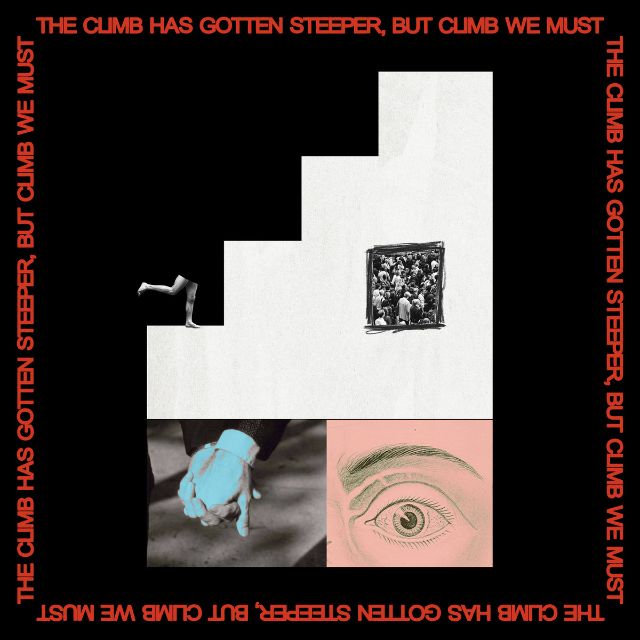
Früsch: "The Climb Has Gotten Steeper, But Climb We Must" [UK Trans Help Fundraiser]
Die Radio X Musikredaktion stellt dir wöchentlich ihre schönsten Neuentdeckungen genauer vor. Die Rubrik “Früsch” gibt es live jeden Donnerstag um 14 Uhr und in der Wiederholung am Sonntag um 16 Uhr.
Kontakt
janina.labhardt@radiox.ch
Social Media
Die Woche gegen Rassismus wird unterstützt durch:



.png/jcr:content/magnolia-medium.png)