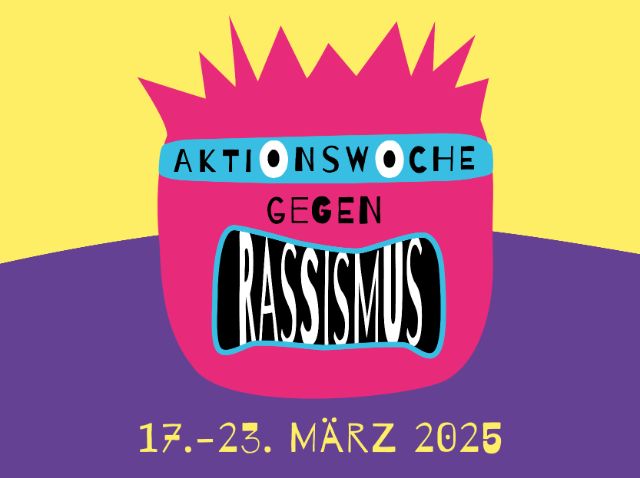
Aktionswoche gegen Rassismus 2025
Dank der finanziellen Unterstützung der kantonalen Fachstelle Integration und Antirassismus und der eidgenössischen Fachstelle für Rassismusbekämpfung organisiert Radio X im Rahmen der Aktionswoche gegen Rassismus vom 17. bis 23. März 2025 die Auftaktveranstaltung zum Thema Hass im Netz, eine öffentliche Aktion mit dem Verein Frauenstadtrundgang sowie mit einer Schulklasse 1. Sekundar Drei Linden in Basel.
Darüber hinaus bringen wir ein intensives Radioprogramm über Antirassismus.
- Portrait der Organisation Netpathie am 20.03. um 7.15, 9.15, 12.15 und 17.15h
- Beitrag zu «Was ich dir nicht sage» von Anja Nunyola Glover am 21.03. um 7.15, 9.15, 12.15 und 17.15h
- 1. Klässler:innen der Sek Drei Linden beschäftigen sich mit den Folgen der Kolonialisierung und dem aktuell grassierenden Rassismus. Sie präsentieren ihre Gedanken, Diskussionen, Aktionen und Statements am Mikrofon. Am 21.03. um 8.00, 10.00, 11.00, 13.00, 15.00 und 16.00h
- Beitrag zu «Tabak und Schokolade» von Martin R. Dean am 24.03. um 7.15, 9.15, 12.15 und 17.15h








Kontakt
Social Media
Öffentliche Aktion in Zusammenarbeit mit einer Schulklasse und dem Verein Frauenstadtrundgang
1. Klässler:innen der Sek-Schule Drei Linden nahmen an einem Workshop des Frauenstadtrundgangs über Rassismus und Kolonialismus teil. Nach einem kurzen Radiocrashkurs wagten sich die 12- und 13-Jährigen auf die Strasse für eine Umfrage bei Passant:innen, in den Zoo Basel für ein Interview, ans Studiomikrofon für ein Rollenspiel oder eine Präsentation, welche Schlüsse und Meinungen sie sich nach der intensiven Beschäftigung mit Antirassismus bildeten.
Hier kannst du die sechs Hörstücke nachhören:
25.03.21 um 8.00h Serie Kolonialismus und Rassismus: Folge 1
Woche gegen Rassismus
25.03.21 um 10.00h Serie Kolonialismus und Rassismus: Folge 2
Woche gegen Rassismus
25.03.21 um 11.00h Serie Kolonialismus und Rassismus: Folge 3
Woche gegen Rassismus
25.03.21 um 13.00h Serie Kolonialismus und Rassismus: Folge 4
Woche gegen Rassismus
25.03.21 um 15.00h Serie Kolonialismus und Rassismus: Folge 5
Woche gegen Rassismus
25.03.21 um 16.00h Serie Kolonialismus und Rassismus: Folge 6
Woche gegen Rassismus
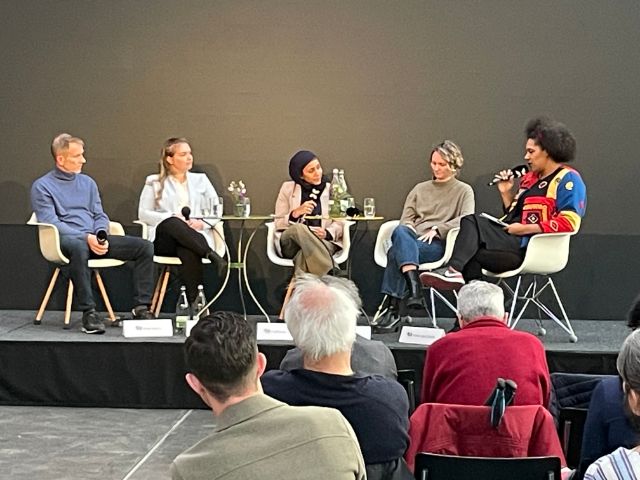
Auftaktveranstaltung der Aktionswoche gegen Rassismus: Hass im Netz
Die Aktionswoche gegen Rassismus 2025 ist mit der Podiumsveranstaltung offiziell eröffnet: Am Montag, 17. März um 17:00h waren fünf Gesprächspartner:innen in der Halle 7 in Basel miteinander im regen Austausch. Radio X bringt die anderthalb Stunden dauernde Diskussion als X-Plus-Sendungen in zwei Teilen.
25.03.20 und 25.03.22 Podiumsdiskussion Hass im Netz
X-Plus in der Woche gegen Rassismus
25.03.27 und 25.03.29 Podiumsdiskussion 2. Teil
X-Plus
Auf dem Podium beginnt Sophie Achermann (Geschäftsführerin der Public Discourse Foundation, Gründerin Stop Hate Speech) ein Inputreferat über Hass im Netz. Es folgt ein weiteres Inputreferat von Peter Sopka (Staatsanwaltschaft Basel-Stadt, Kriminalpolizei, Leiter Dezernat Digitale Kriminalität), der seine Polizeiarbeit vorstellt.
Im Anschluss diskutieren Tamara Hürlimann (Kriminologin, Workshopleiterin Netpathie), Fathima Ifthikar (Generalsekretärin Föderation islamischer Dachorganisationen Schweiz), sowie Peter Sopka und Sophie Achermann über Rassismus und Diskriminierung im Netz.
Moderation: Elisa da Costa (Gründerin Blackfluencers und Afrokaana, Sendungsmacherin Djoliba bei Radio X).
Portrait über Netpathie
Eine Podiumsdiskussionsteilnehmerin an der Auftaktveranstaltung "Hass im Netz" ist eine Workshopleiterin von Netpathie: Tamara Hürlimann. Was steht hinter dem Non-Profit-Verein, was war die Gründungsidee und wie deckt das Team unterschiedliche Branchen ab? Ein Portrait.
25.03.20 Portrait Netpathie
Info
Susanne Lüscher und Petra Marty sind die Co-Gründerinnen, die vor dreieinhalb Jahren den Verein Netpathie ins Leben gerufen haben. Es geht um einen respektvollen Umgang, eine sorgfältige Kommunikation und eine angemessene Begleitung von Heranwachsenden in der Digitalisierung.
Susanne Lüschers Background ist das Bildungssystem bzw. die Pädagogik. Petra Marty arbeitet in ihrem übrigen Arbeitspensum in der Privatwirtschaft. Die beiden Netpathie-Mitarbeiterinnen sind überzeugt, dass sie sich ideal ergänzen, wenn es um Workshops und Weiterbildungen mit Eltern, Heranwachsenden, Fachpersonen und Mitarbeitenden von Unternehmen geht. Im Team von Netpathie gibt es auch Psycholog:innen, Grafiker:innen, SRF-Sendeleiter:innen, Krimonolog:innen Cybercrime, Heilpädagog:innen usw.
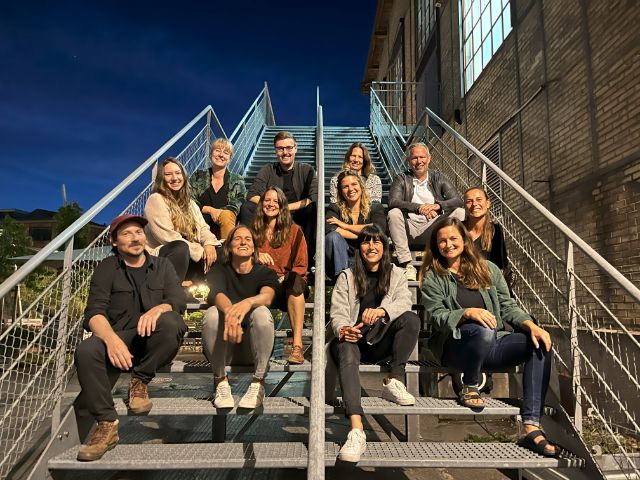
Antirassistisches Buch von Anja Nunyola Glover
Ein Einblick in ihren täglichen Kampf gegen Rassismus, ihre psychischen und physischen Verletzungen sowie ein Buch für Empowerment und Selbstreflexion: Anja Nunyola Glover hat mit ihrem Debüt "Was ich dir nicht sage", das im Eigenverlag erschienen ist, viel angestossen und bewegt.
Die light-skinned Schwarze, deren Wurzeln in Ghana und der Schweiz sind, schreibt mit vielen autobiografischen Angaben über ihren Alltag: ein diskriminierender Affront hier, ein lieb gemeintes, aber ausgrenzendes Kompliment da oder eine neugierige Frage nach ihrer "wirklichen" Herkunft dort.
Antirassistisch, hinterfragend, selbst reflektierend, oftmals ruhig, aber laut denkend spricht die Autorin in Du-Form verschiedene Menschen der Leser:innenschaft an, unter anderem ihre Mutter, Politiker:innen, Auftraggebende, aber auch unbekannte Passant:innen.
Zeitlich und regional aktuell ist eine Textpassage über die Rassismus-Debatte an der Basler Fasnacht passend. Anja Nunyola Glover beschreibt rassistische Diskriminierung einer Fasnachtsclique 2024, die im Namen der Narrenfreiheit und angeblichen Sujet-Kreativität Menschen im Dschungel darstellt. Wie positioniert sich das Fasnachts-Comité dazu? Wie sieht diese Debatte an der Luzerner Fasnacht aus?
Die Autorin trägt verschiedene antirassistische Aktualitäten zusammen und kommentiert sie in einem klaren Ton.
"Was ich dir nicht sage" ist im Dezember 2024 erschienen, bewegt sich zwischen den Genre Roman und Sachbuch und ist hoch auf den Bestsellerlisten des Schweizer Buchhandels- und Verlags-Verbandes zu finden.
25.03.21 Was ich dir nicht sage von Anja Nunyola Glover
Infobeitrag in der Woche gegen Rassismus
Antirassistischer Roman "Tabak und Schokolade"
Der Basler Schriftsteller Martin R. Dean hat einen autobiografischen Roman geschrieben, der seine Kindheit auf der Karibikinsel Trinidad und Tobago und später im Wynental im Kanton Aargau thematisiert. In der Schweiz wurde und wird der Autor aufgrund seines Aussehens oft rassistisch angefeindet. Die Schweizer Schulen hätten ein grosses Potenzial in der antirassistischen Sensibilisierung, sagt der ehemalige Lehrer Martin R. Dean.
Als Gymnasiallehrer hat Martin Dean die Erfahrung gemacht, dass die Schüler:innen einen Motivationsschub erfahren, wenn ihre Migrationsgeschichte gesehen und anerkennt würde. Politische und literarische Diskussionen über Ressentiments, Hierarchien, Mikroaggressionen und Rassismus seien in den Schulen enorm wichtig, sagt er.

25.03.23 Tabak und Schokolade von Martin Dean
Info in der Woche gegen Rassismus
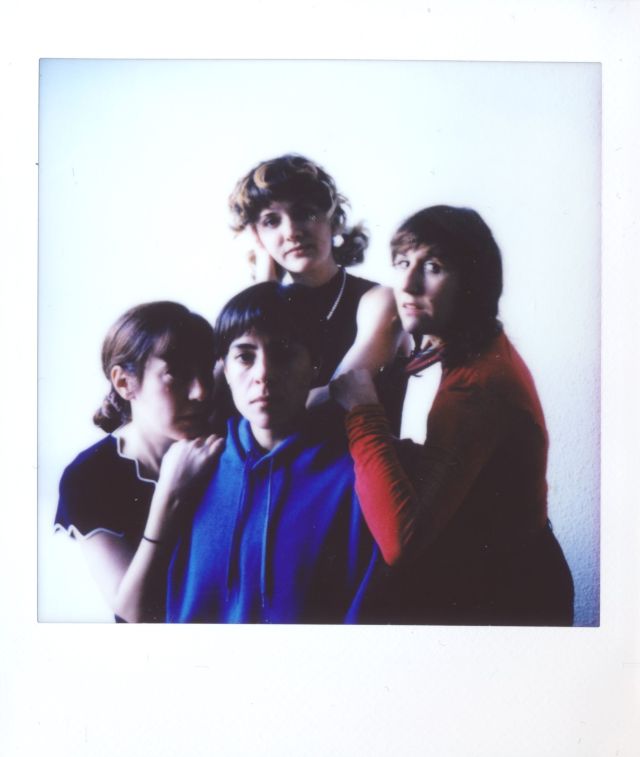
"Together we are stronger" Baroque Punk Band Melenas im Interview
Melenas sind eine vierköpfige Band aus Pamplona in Spanien. In ihrem dritten Album "Ahora" singen sie in ihrer Muttersprache über Zeiträume und wie es diese zu gestalten gilt. Am vergangenen Mittwoch spielten sie in La Parenthèse, einem kleinen Club in Nyon, ihr bisher einziges Konzert in der Schweiz. Wir redeten über ihr spanisches Grauzone Cover und warum es wichtig ist, mit wem man seine Zeit verbringt. von Mirco Kaempf
Als wir um 19:30 den Keller von La Parenthèse betreten ist die Bühne noch ziemlich leer. Sie hätten gerade etwas Verspätung, haben noch nicht mal den Soundcheck gemacht, sagt uns Drummerin Lauri müde lächelnd. Sofort der warmen Coolness der Band verfallen entschuldigen wir uns, fragen ob wir später wiederkommen sollen, und werden aber sofort von Bassistin Leire und Sängerin, Gitarristin und Synth Spielerin Oihana vertröstet. Mit ihnen beiden begeben wir uns in den kleinen Treppen-Zwischengang und beginnen das Interview.
It's your first time in Switzerland! We are at La Parenthèse right now, a really small tunnel-like club. How do you like it so far? You haven't had sound check yet, but any words on it?
Oihana: I think it's gonna be cool. We like small clubs where you can feel the audience close to you. This works well for us.
Leire: Yeah, the atmosphere that it creates, the small places next to the audience, yes. It's kind of magic.
Since it's your first time playing in Switzerland, I have to ask: three years ago you released a single called Osa Polar, which of course is a cover of «Eisbär» by swiss band Grauzone, very much a classic not only in Switzerland, but of course in other countries as well. What made you do a cover of this specific song?
O: Well it it started because we had to record some live songs of our LP, «Dias Raros» on TV. And they asked us to do a cover of a song that will not be in our style at first. And we were thinking about a song and we all loved that one, so, so much. We thought it would be cool to try to do it uhm...
L: Make it ours, like in our own style.
O: And at that point I bought a new synth and we tried it with it and it was all with synths, no guitars. And after that it also changed out sound.
Does this song have any political connotations to you?
O: It was not a reason to to choose that, but I feel it has some kind of message. Of course, yes.
With starting to utilise synthesizers more your sound changed. The songs on «Ahrora» sound very textured, and the first single that you released from it was «Bang» . I listened to a live recording that you did of it today and I was very surprised, because suddenly I was crying and I couldn't understand why.
Who was crying?
Me! Suddenly it happened! And I didn't know why, but maybe you could explain it to me. What is this song about?
O: Well, this song talks about the power of togetherness. Of the four of us, because we have been working together a lot. I don't know if you say it like this, but it’s about not listening to all these messages that have come from some people. From people and their voices that could have stopped us or make us go in another direction. It talks about not listening to these 'shots' from outside, these 'bangs'.
L: Yeah. Negative voices that want to stop you. It's like, no, we can go on. And if we are together, we are stronger. In the video we made for the song you can see it. The four of us are walking our own way [along the road].
The album is titled «Ahora» - in the liner notes of the album you speak about the factor of 'time' and how it plays a big role in your songs lyrically, like what you do with your time and who you spend your time with. It seems to me very much in the sense of an art historical notion. Like «Momento Mori» or «Carpe Diem» of baroque times. In a way, it's almost like you're a baroque punk band! Has ‘time’ a political component to you?
O: I think the topics we choose are the things that are important or are in our minds. That's why you talk about things now and it has a component that is political because we talk about.
L: Yes
O: Because in in this, for example in «Mal» we talk about why do we have to spend so much time on our jobs if that's not what we really want to do. We talk about the people you spend the time with and how does it change your life? As we said, «Bang» talks about this 'togetherness' to live the moment with more power or to keep going on your path. I don't know - It's it's political, yeah.
L: Yeah, maybe in the album «Dias Raros» [the second album], we talked more about our dreams or projects or the past, and it was more melancholic. [...] During and after the pandemic we had time to think about many things. Like, what do we have that is in front of us right now.
Would you go as far as to say it's a pandemic Album?
L: No, no, no, not at all. No. It's different that.
O: this happens when you start thinking about what it is about, because it was not like a conceptual album. We made all the songs, we composed all the songs, and once they were recorded, we were thinking about what were we talking about in this album. And we realized that this was something important.
Hm I thought it was pretty significant for today where everybody has these gadgets and things and it's sold to you as to save yourself some time. In the end it just glues you to a screen and you forget everything around it – at least that’s a thing that I take away from it.
But when we talk about time, I also thought it was quite interesting looking at the two weeks of your EU tour that you're doing right now. You are playing some amazing smaller venues like Komet in Hamburg, Schokoladen in Berlin and in London, of course, the Shacklewell Arms. I thought a band of your notoriety would be able to play bigger venues if they wanted to. Was it a conscious decision to spend your time touring smaller venues with smaller crowds?
O: I don't know. We were just trying to tour. We didn't know if we can even go to bigger venues...
L: It's the second European Tour really. And well, the first one was very good and the venues were crowded, but...
O: Yeah it was our first time in Berlin for example and in Germany we were like once or twice before
L: So we are testing it right now. So maybe we will have to come to bigger ones. I don't know, we love all!
Well, what do you think is is more important: to play for a crowd in the Shacklewell Arms or to play for the New York Fashion Week?
O: Both!
L: New York Fashion Week was fun. Yeah. We like. We like to live different experiences. So that was like surrealistic dream. Yes, being there and...
O: ...Playing in a very different atmosphere. And the experience of seeing the models walking with your music, it was pretty crazy. I mean, I couldn't look at them because I was like *chicken skin*... I don't know. Very crazy.
Well, if we talk about big scenes and small scenes, I have a bit of a carte blanche question for you. What do you think is the most problematic thing about rock music or the rock music scene? Do you have any opinions on that?
O: The conditions for us musicians are not easy, because you have to pay for a lot of things when you tour. And yeah, I mean, it's not easy always.
L: Yeah, not in Spain at least. We have our own jobs because we can't live off our music, it's super difficult and it takes a lot of time of work, and it's not really fair.
O: Yes
So you feel like there is not enough funding for musical culture?
Yeah, exactly. Yeah.
How much do you rehearse?
O: Well it depends, ha. I mean now that we are playing that much, we just rehearsed before the shows, but this summer, for example, that we had to introduce this rhythm machines and new synths and stuff, we've been rehearsing a lot. Almost every day.
Still in Pamplona?
Yes
Why don't you shout out some of your bandfriends for us to check out?
So there's Exnovios for example, they do this reverb core pop too.
Then we have Touchers [?] that are friends too, that is more pop-punk in Basque
Hiuzz, that's more 90s oriented
Then Kokoshca, different music for different generations that's coming
And like Chill Mafia,
Lots of music coming out in Pamplona
Sounds so prosperous! Well, 2 last from our weekly Indie music special MAINSTREAM. I know you have recorded la music video for très segundos where you play it like a sitcom intro.
Yes.
For what kind of movie would melenas's pen a soundtrack to? Given the chance, what kind of movie would you make?
O: Oh my God.
O: I think it will be an indie movie too. I don't know.
L: High fidelity.
Person working in a record shop making lists all day.
Yes
And now imagine you're DJing in front of a huge crowd. Everybody's feeling all the vibes and it comes to a peak of vibrancy and atmosphere. What song are you dropping?
O: It's an obvious choice for for us, but I would say French disco? I love French disco [Stereolab]
L: Yeah, yeah. We are always listening to music and these kind of questions are the most difficult.
Well, thank you very. Thank you for taking the time to talk to me and I hope you have a wonderful...
O: I know another one! Yeah. The one we play when we finish the show sometimes.
L: Ah! "Conga", Gloria Estefan.
Verwandte Artikel
A Meeting with... Lewsberg
In This House von Lewsberg erschien am ersten Tag des niederländischen Corona-Lockdowns – eine Veröffentlichung ohne Tour, fast unbemerkt. Fünf Jahre später treffen wir in Rotterdam zwei ehemalige Mitglieder der inzwischen aufgelösten Band. Im Gespräch mit Arie van Vliet und Shalita Dietrich reden wir über unperfekte Musik, das Verschwinden kreativer Freiräume durch Gentrifizierung – und daüber, wie man als Band einen eigenen Sound findet, ohne die Einflüsse zu verstecken.
Lael Neale: "Maybe the museums should burn"
A brief interview with American chanteuse Lael Neale on the beauty (& ugliness) of personal experience composed in a universal language, all on the trails of her very own, dead poet society. Some thoughts recorded after attending her gig at DOKA, Amsterdam on a Monday night 19th of may 2025.
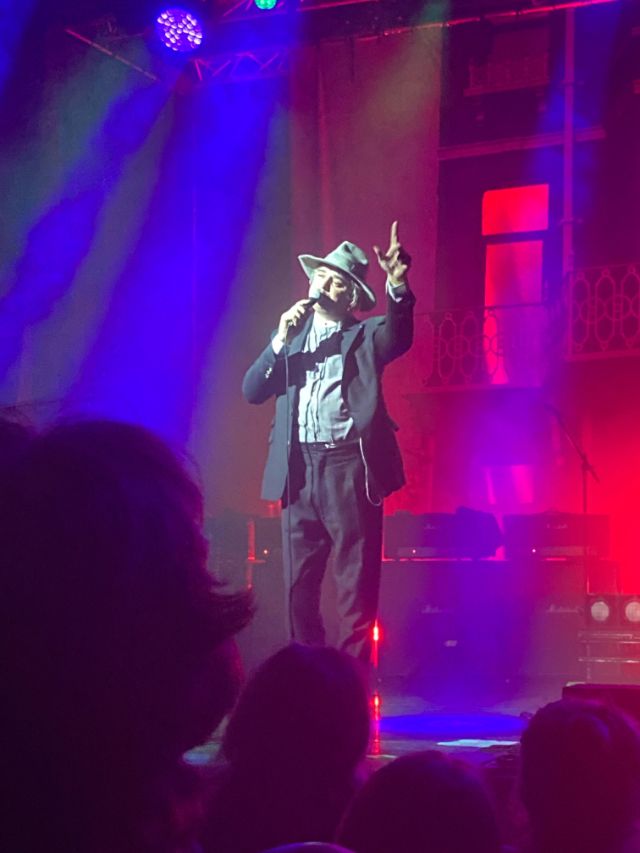
"What is rock music?" Libertines Gig Report und En Attendant Ana im Mainstream
Ein Wiedersehen mit einem alten Schwarm nach 17 Jahren und ein kurzer musikalischer Exkurs zur Mathematikerin Ada Lovelace sind Beiträge, welche ihr in der Mainstream Ausgabe dieser Woche hört.

"We make our own rules" Parsnip on reframing 1960s Pop
Mit ihrem zweiten Longplayer 'Behold' haben die Australier:innen von Parsnip einen beinahe orchestralen Pop Opus aufgenommen, welcher eine ganze Palette von Klangfarben von 1966-1968 zusammenmischt. Dennoch bewahren sie sich einen sehr zeitgenössischen Geist. Wir haben sie in Bern kurz vor ihrem drittletzten Auftritt ihrer ersten UK/EU Tour interviewt.

Let your freak flag fly! - The Black Lips im Interview
Der Drummer zählt ein und auf den ersten Beat ist das Publikum schon am ausrasten. Den Black Lips eilt ein schlechter Ruf voraus, der auch letzten Freitag in Luzern nicht enttäuscht. Wir haben diese phänomenale Band vor ihrem Konzert zum Gespräch getroffen.
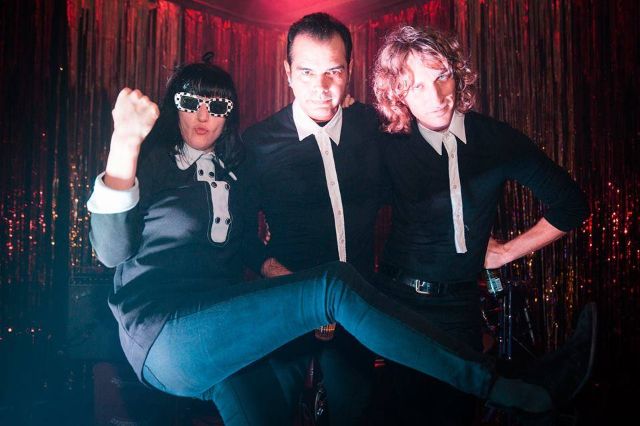
"Rock&Roll ist der Anti-Held" - The Jackets im Interview
Während ihres Konzertes in der Kaschemme liess uns das Trio kaum Zeit um durchzuatmen. Glücklicherweise konnten wir kurz vorher noch mit ihnen über die neue Platte reden, und darüber was es heisst, mit Fuzz und Lärm Geschichten zu erzählen. Freak out!

"Ich glaube an die Göttlichkeit" - Fat White Family im Interview
Musik ist heilig und die Welt sollte vielleicht so schnell wie möglich zu Grunde gehen. Eine der wichtigsten Rockbands Englands spielten am Freitag in Strasbourg. Eine Gelegenheit also, mit Songwriter Nathan Saoudi zu sprechen.
.png/jcr:content/magnolia-medium.png)