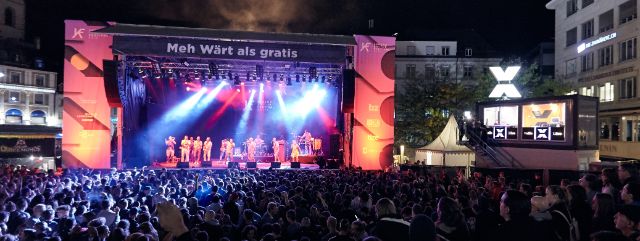
Jugendkulturfestival 2019
Das Jugendkulturfestival Basel (JKF) fand am 6. und 7. September 2019 in der Basler Innenstadt statt. Radio X sendete auch 2019 live vom JKF!
Auch 2019 war Radio X wieder mit einem Studio-Container auf dem Barfüsserplatz hautnah dabei und sendete folgende Konzerte von der Barfi-Bühne live auf dein Device:
Projektleitung: Claire Micallef
Freitag, 6.September 2019
18.00h Weird Fishes
19:30h Café da Manhã
21:15h Dritte Stock Records
22:45h Pyro & Schwellheim
00:00h Les Touristes
Samstag, 7.September 2019
15:00h Boxitos
17:20h Arbajo Jairus & Them Lovers
19:00h Emilia Anastazja
20:15h Annie Goodchild
21:30h Carvel'
23:00h Don't Kill the Beast
00:15h Naim
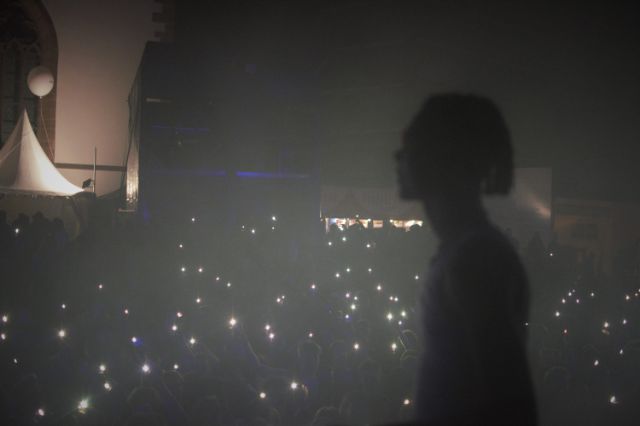
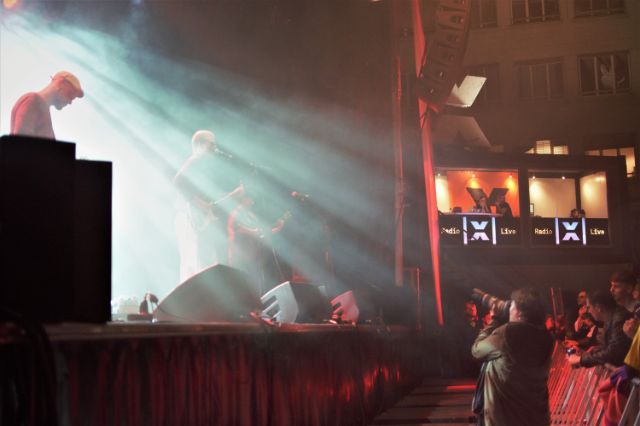
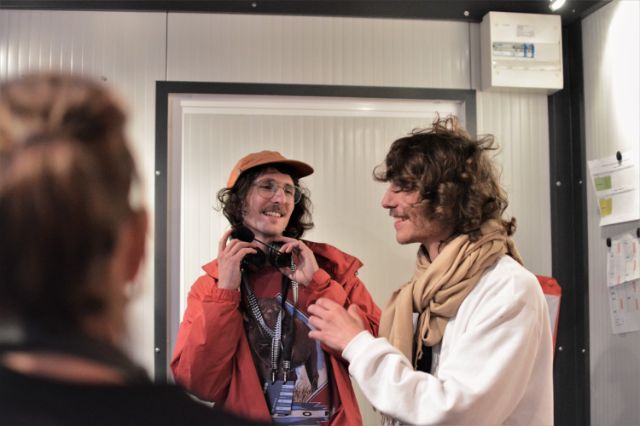
Zwischen den einzelnen Konzerten war bei uns natürlich nicht tote Hose. Wir haben die einzelnen Künstlerinnen und Künstler aus allen Sparten des Festivasl zu uns in unseren Sendecontainer bestellt und redeten mit ihnen über Bierduschen, Einhörner und natürlich auch noch ein wenig über ihre Performance am JKf. Dazwischen gabs wie üblich den dopesten Sound von Basel!
Hier noch ein Überblick über unser Interview-Programm:
Freitag, 6. September
17:05 - JKF OrganisatorInnen
17:35 - Weird Fishes
18:05 - Von Oben Herab
19:05 - Nomuel
20:15 - Mono Mojo
21:05 - Moonpools
22:00 - L'Arbre Bizarre
22:30 - Keine Helden
23:30 - Zatokrev
Samstag, 7. September 2019
15:40 - The Movement
17:00 - Hobby Lobby
18:00 - Amixs
18:25 - Emilia Anastazja
18:50 - Totem Nevada
19:45 - Gina Été
20:05 - Echolot
21:05 - Dolphin Squad
22:20 - Asbest
22:50 - Suicide Salmon
00:00 JKF OrganisatorInnen
Radio X mit drei Talks am JKF - in der Offenen Kirche Elisabethen
Samstag 7.9.2019 16:00 Nachhaltigkeit und Festivals
Schonmal an einem Festival beim Aufräumen dabei gewesen? Festivals haben den schlechten Ruf unverhältmässig hohe Abfallhaufen zu hinterlassen. Luca Frabotta umreisst mit seinen Gästen das Thema Nachhaltigkeit und Klimaschutz in Bezug auf Musikfestivals, im konkreten Fall den Umgang damit am Jugendkulturfestival in Basel.
JKF2019 Talk: Nachhaltigkeit und Festivals
Festivals produzieren Müll. Was können Festivals dagegen tun, um nachhaltig zu sein?
Samstag 7.9.2019 17:00 Erste Schritte auf die Bühne – Eine Band erzählt
Wie ist es, als junge Band den Schritt aus dem Proberaum zu wagen? Was sind Stolpersteine und Chancen? Marcello Capitelli erörtert zusammen mit der jungen Band Mallumi die Herausforderungen eines Neulings in der Musikszene.
JKF2019 Talk: Erste Schritte als Band - Mallumi
Die Ersten Schritte als Band sind mit einigen Kniffs verbunden. Larissa von Mallumi erzählt.
Samstag 7.9.2019 18:00 Sexuelle Belästigung - Wenn ein Nein nicht ausreicht
Moderation: Claire Micallef
Eine Hand auf dem Hintern, sexuelle Kommentare oder ein Typ, der sich beim Tanzen von hinten an dich schmiegt. Kommt dir das bekannt vor?
Um gegen sexuelle Belästigung im Ausgang vorzugehen, wurde 2016 in der Stadt Münster das Luisa-Projekt ins Leben gerufen. In der Schweiz wurde die Kampagne von Städten wie Winterthur oder Zürich adaptiert und im Herbst will die Opferhilfe beider Basel die Kampagne nun auch in Basel starten. Was bringt das Luisa-Projekt konkret? Und was kann Frau und Mann gegen sexuelle Belästigung tun? Wir reden mit Betroffenen, mit Experten und mit euch, dem Publikum.
JKF2019 Talk: Sexuelle Belästigung
Claire Micallef eruiert mit ihren Gästen die Thematik von Sexueller Belästigung im Ausgang und an Musikfestivals. Was kann dagegen unternommen werden?
#badtastehenna

Wir wollten euch am JKF alle etwas aufhübschen! Deswegen gab es an unserem Stand in der Offenen Kirche Elisabethen eine Henna-Tattoo-Session der etwas anderen Art. Kulturschaffende, die am JKF aufgetreten sind, waren die Tattoo-Artists, du ihre Leinwand. Schöne Schnörkel und Mandalas waren allerdings fehl am Platz, denn unsere Artists sind Masters of Trash. Und auch bei der Wahl des Motivs hattest du nicht viel mitzureden. Die lag ganz beim "Wheel of Destiny". Einzig die Wahl des Orts, an dem du dein Henna-Tattoo willst, die überliessen wir dir noch. Und, siehe da, einige haben sich getraut!
Einen Eiblick in das kuriose Sammelsurium an #badtastehenna findest du auf unserem Instagram Account.
unsere Insta-Story:
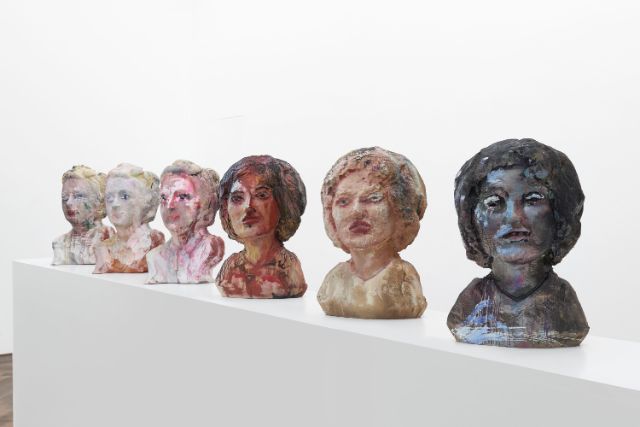
Kaari Upson - so sinnlich, so exorzistisch!
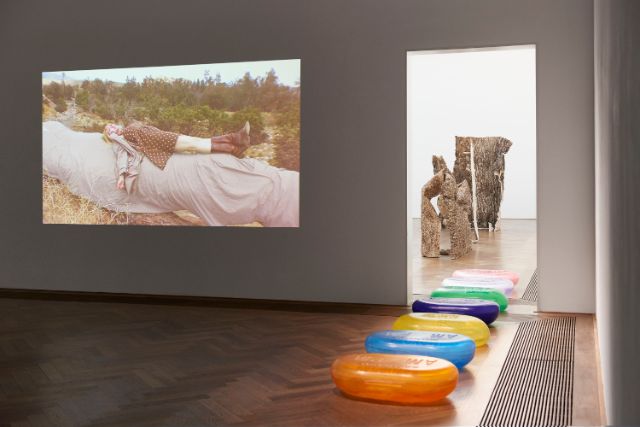
In ihrer Einzelausstellung Go Back The Way You Came erforscht die Kalifornierin zutiefst Subjektives und wirft dabei allerlei Fragen auf, die es nicht unbedingt zu beantworten gilt. Aktuell zu sehen in der Kunsthalle Basel. von Mirco Kaempf
19.09.28 Kaari Upson
Die Kalifornierin Kaari Upson ist sowas wie eine poetische Anthropologin. In der Ausstellung Go Back The Way You Came erhebt sie Vergangenes zu exorzistischen, post-Realen Kunstformen.
"San Bernardino liegt in Kalifornien und ist der Ort, aus dem McDonals entsprungen und Meth Amphetamin entdeckt worden ist" - So leitet Elena Filipovic, Direktorin der Kunsthalle Basel, auf die aktuelle Ausstellung Go Back The Way You Came ein. Beide, sie wie auch die Künstlerin Kaari Upson haben dort ihre Kindheit verbracht. Nebst vielen schönen Erinnerungen sei es allerdings auch ein Ort des Traumas, so Upson. Diese Erinnerungen bereitet sie auf, teilweise anthropologisch genau, manchmal absichtlich subjektiv und lose, um Kunst entstehen zu lassen. In unserem Gespräch gab sich die Künstlerin lässig, zugänglich und hatte auch ein paar Tipps und Einsichten für Studierende übrig. Die Ausstellung läuft noch bis am 10. November.
Right, so are you more of a punk than a classic rock fanatic?
Kaari Upson: I would like to think so, I’m a little old to be punk, but yeah!
It’s all a state of mind! But yeah, « Go Back The Way You Came » - the way Elena Filipovic told us about San Bernardino, it seemed to me like it would be a place of violence and the elements going crazy. Why do you go through that whole trauma of revisiting your home or your childhood home?
Well first of all I am very interested in the fact that this becomes a little bit more plural. For example I'm expanding the subjectivity through the lense of my friend at times. It’s not as personal as it seems but it stands in for any sense of place that had ritualistic trauma to it. And the very reason to rehearse it, or bring it back, is so that it’s not repressed. So it’s simply to unearth it and free yourself from it. I’m very interested in psychology and Freud and misreading Freud… so there is a time when you’re caught in the maze of it and you can’t get out and then all of a sudden when I’m installing [the work] in here and realising we were exorcising some real shit. And so you do that so that you don’t carry it. And that’s it. So why do it? It’s so I don’t become like my other crazy relatives that pretended it didn’t happen and literally closed the door and walked away and I exorcise the shit out of it.
So your own past doesn’t become a prison. Are you just a visitor basically?
There is so much time slippeage in it, I don’t know where I’m placed anymore. The idea of going in and just being a visitor doesn’t seem correct. It’s like it’s more than that. I think it’s the idea that I became it and it’s deadcenter inside of me and then I can decide to free it.
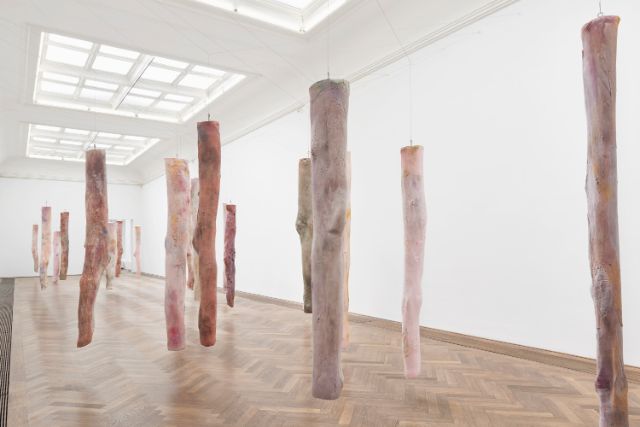
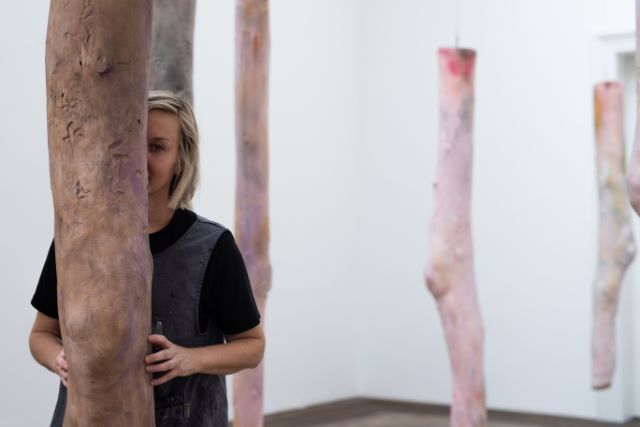
You as an artist make the personal universal in a way and I read that you had a painterly background. These wooden legs («Mother’s Legs») are basically paintings, which I quite like. When you did these, was there a more meditative approach to it or was the process a more rebellious one?
It was the most physical work! We were sweating in hazmat suits as a crew, we were playing the Yeah Yeah Yeahs and it was a very physical process. It was almost like we were athletes… You pull this rubber-like thing off of it hoping it’s not gonna rip and you laugh a lot because you’re falling over trying to pull this elastic band off of this hopefully static, solid thing… and you don’t know what it’s gonna look like so you get this moment of reveal… So there is a lot of laughing and having fun and it was a lot of like playing a game and hoping you’d win. So it’s not a meditation! Even when I was painting it was like «what is this gonna be» and like, wanting to own it… like master that moment and not fail.
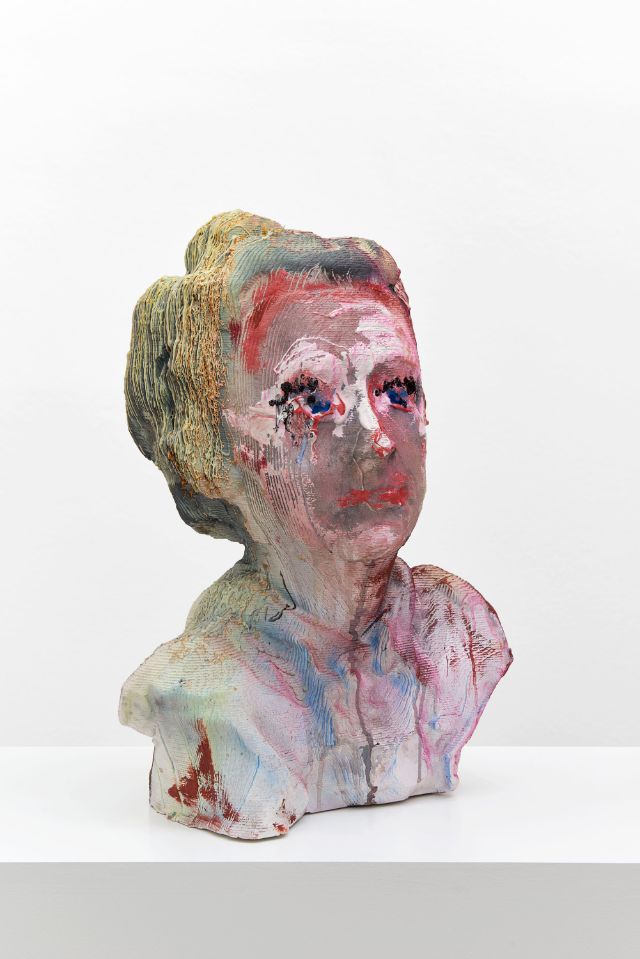
I like that approach, not quite knowing how it will turn out… You once stated that once your work leaves the studio, it’s dead.
Yeah
So is this dead art, does it belong to eternity now?
Yeah it’s dead! Sorry, it’s dead! But dead art is a good thing. I love the idea that it’s no longer mine. The only thing about I’d say that’s not true is the drawings. I could at any point go back in. I made them so big so that nobody should frame them so that if I’d see it anywhere I could just walk up to it and add another piece of text or a drawing if it’s neccessary. But I love the moment when the work leaves because we spraywash the whole studio with this giant machine and the whole studio becomes this giant puddle of water and then we normally throw a very large party – we didn’t get to do it yet – and we have a theme for the party which we take very seriously. And we cook whole pigs and have a DJ and we celebrate, and then we start all over again.
Do you like museums?
I love museums but I haven’t been able to see any since I arrived !
Don’t you feel like if a majority of society reveers a certain kind of art it’s kind of…
Oh yeah that’s total shit. When it’s the board members that… [pauses] Yeah I didn’t have the privilege to go to museums as a kid. My first experience of going to a museum was MOCA and I was 19 and I saw the Helter Skelter show and it was the best show, still in my head. Because well, it was my first show! And I went with this boyfriend who was being a complete asshole and then he left me alone and drove off so I was stuck walking around in this museum which was like a warehouse… looking at the craziest shit in my life. I mean this was Paul McCarthy and Raymond Pettibon was on the back wall and there were just these doodles on these pieces of paper... so that’s my experience of a museum. Otherwise yeah, it’s just the idea that every student that I know wants to show in an institution - I would say you got it all fucking backwards! I mean that’s the very thing we shouldn’t be aspriring to because it’s a closed system and there’s more power in other places. So yeah, we still have our own little areas like in my studio, we are opening a tiny little restaurant for one and it has like a turnover space where I get to do whatever I want or whatever they want but yeah…. I still love museums.
What would you say to those students of art then, how do you become culturally significant ?
Oh, am I significant ? (laughs) I don’t know. You come back in ten years and maybe I’ll have an answer.
Should it be the goal though, to become significant ?
No ! I’m too public now, nobody should recognise me. And they don’t. Because artists aren’t famous people. There is no ‘becoming that’. The goal should be that nobody can locate you completely. That’s my answer.
I started late. I think the best thing you can do is not show your artwork. And stay hidden for a very long time and then you know the moment that you need to show it. Because I didn’t even know for most of my years painting that you need context. And you need a viewer in order for it to be art. My closest friend said that I wasn’t an artist because nobody saw the work. And it freaked me out because I didn’t even know that was possibility. I was like, I’m painting since I’m 16 and she was my best friend and she said that’s not art because there is no context. And so I gave examples of some guy in Siberia that was cutting trees and carving them in the middle of nowhere, so he’s not an artist? And she said no. So I decided to go back to school and have conversations and for me it was the greatest experience of my life because well, I was ready for it.
Do you think that the becoming of the self is the most important thing in the world?
Well since all my work is circling that, I think it’s circling it because I’m questioning if that’s even true. We cut this tree down and the recording of it didn’t account for it very well at all - even though it was really impactful. I mean, this tree was 80feet with the branches and when it hit the ground I had this very weird moment where I felt like that this is so much more important than anything. I couldn’t give it language. It was a crazy feeling that something was so much more relevant than anything. Like all those neuroses, ideas and thoughts of humans meant nothing. It was a real physical space. So I don’t know, maybe I’m circling the Self because I don’t know if that’s the thing where it actually is at.
Would you say though that this is exactly the most important thing an artist can do, to explore his or her own soul until it’s bare so the rest oft he world can benefit from that?
No I would not say that. I record myself in ways, but what I’m doing is to pathologically, impulsively, irrationally and rationally record everything. The video is recording, the sound, the putting latex on shit, the, sitting and writing thoughts about your dreams – All of it is recording. I don’t really look in as much as I think I’m looking out – and then taking it all and then filtering it through what I have, which is this body and that’s the only time when I think that I matter.
That sounds like a very scientific approach
It is ! I took a lot of anthropology courses and look at documentary, film and stuff. I really like the slippeage in it, finally pointing back to the fact that there is no way to record without altering and that there is always subjectivity in everything. And I like that. The more of it, the better !
Last question, what disturbs you most about the modern world?
(pauses) That anybody could find me at any time because I have this phone… Like I can’t get lost. And I used to say that the feeling of being lost, like when you literally go to a place and you don’t know where you are is one of my happy moments. And I don’t have that anymore – cause I have a phone. And I always know where I am. All the time. And it sucks.
Throw it into the river!
No ! People need to reach me! I have to talk to them! So I’m never lost anymore.
Thank you for the interview!
Verwandte Artikel

Bizarre Silks, Private Imaginings and Narrative Facts, etc
So heisst die neue Ausstellung in der Kunsthalle. Der Künstler Nick Mauss hat diese zusammengestellt. Er hat das Ausstellungsmachen wiederholt zur Kunstform gemacht. Zeitgenössische und historische Werke wurden zusammengebracht und neu in den Kontext gesetzt. Wir nehmen dich im Kulturtipp mit auf einen kleinen Rundgang durch die Ausstellung.

I am Gong -Dora Budor
Die aktuelle Ausstellung in der Kunsthalle Basel erzählt die geschichtliche Beziehung zwischen der Kunsthalle und dem Musiksaal quer genüber im Stadtcasino Basel. Der Auslöser der Klänge und visuellen Effekte in der Ausstellung, sind auf die Verbindung der zwei Gebäude zurückzuführen. Auf den ersten Blick ist es nicht ersichtlich, was gezeigt wird, aber sobald du erfährst, was dahinter steckt, wirst du es verstehen.
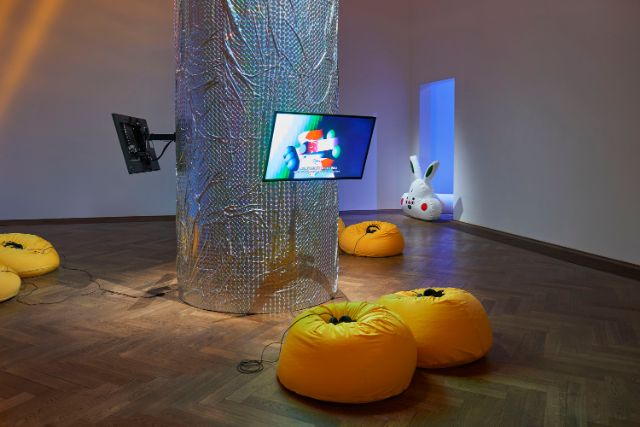
Der Flirt zwischen dem Analogen und Hyperdigitalem
Im Rahmen zweier Ausstellungen der Kunsthalle Basel darf der Besucher in den oberen Räumen selber Hand anlegen, während er sich in den unteren Räumen berieseln lassen darf.
say cheese!
last but not least: die Fotobox-Fotos vom JKF 2019
Sponsoren
Die Live-Übertragung von Radio X am Jugendkulturfestival 2019 wurde unterstützt durch die Abteilung Kultur des Präsidialdepartements Basel-Stadt
Die Umsetzung der der Live-Übertragung 2019 fand in Zusammenarbeit mit folgenden Partnern statt:


.png/jcr:content/magnolia-medium.png)