Norient TIMEZONES
TIMEZONES PODCAST-SERIE AUF RADIO X
Die Podcast-Reihe TIMEZONES erkundet die vielfältigen Realitäten von Künstler*innen und ihrer Praktiken weltweit und stellt die Frage: Was bedeutet es heute, in verschiedenen Ländern, Städten und Kontexten im Bereich Kultur und Kunst zu leben und zu arbeiten? Die Reise geht von Nairobi über Rio de Janeiro bis nach Beirut und Mount Makiling auf den Philippinen / die Ukraine und verarbeitet die Gedanken und Stimmungen der Künstler*innen, ihre sozialen, politischen und intellektuellen Realitäten und ihre(Lebens-) Philosophien zu künstlerischen Audiocollagen.
TIMEZONES spielt dabei mit Formaten und Inhalten: der Podcast bewegt sich zwischen Journalismus und Experiment, Dokumentation, Ethnografie, Fiktion, Klangkunst oder Improvisation. Georgrafische Grenzen, Zeitzonen, Genres und Praktiken sollen überschritten und mit neuen künstlerischen Formen des Austauschs, des Zuhörens und des Erzählens experimentiert werden. Gemeinsam mit lokalen Produzent*innen und Künstler*innen entstehen dabei sehr persönliche Portraits und aktuelle Geschichten aus Städten rund um den Globus, die einen sehr subjektiven Eindruck in das weltweite und aktuelle Musik-und Kunstgeschehen ermöglichen.
TIMEZONES ist ein gemeinsames Projekt des Goethe-Instituts und Norient, dem weltweiten Redaktionsnetzwerk für zeitgenössische Musik- und Medienkulturen.
Radio X ist neu als Partner mit an Bord: Als Weiterführung der im 2022 gestarteten Sendereihe airtime!, die künstlerischen Stimmen aus dem Globalen Süden und Osten Gehör verschafft, strahlen wir einmal im Monat eine Podcast-Folge aus.
26. April NAIROBI: Nairobi’s Next Generation Music Producers and Performing Artists Speak Out
24. Mai BEIRUT: Traces of a City – A Pod Poem
21. Juni RIO DE JANEIRO: Staying Creative Between Beauty and Chaos in Rio de Janeiro
19. Juli MOUNT MAKILING: Ears on/of Mount Makiling
23. August BUENOS AIRES: Relations Condensed in Practice
ENG:
The TIMEZONES podcast series plunges into the world of artists and their practices, asking: what does living and working in culture and the arts involve in different countries, cities, and contexts today? The experimental journey goes from Nairobi via Rio de Janeiro to Beirut and Mount Makiling in the Philippines/Ukraine and brings the he artists’ thoughts on their moods, their social, political, and intellectual realities and their philosophies (of life) into experimental audio collages.
The TIMEZONES podcasts run the gamut of formats and content, from straight journalism to experimental and documentary approaches, ethnography and fiction, sound art, and improvisation. The series endeavors to create new artistic forms of storytelling, listening and exchange across the boundaries of geography, time zones, genres, and practices. Together with local producers and artists, the podcast creates very personal portraits and current stories from cities around the globe, which allow a very subjective impression of the worldwide and current music and art scenes.
The Timezones Podcast Series is co-initiated and co-produced by the Goethe-Instituts and Norient, the worldwide platform and network for contemporary music and media cultures.
Radio X is now on board as a partner: As a continuation of the series airtime!, which was launched in 2022 and which makes artistic voices from the Global South and East heard, we broadcast a podcast episode once a month.
April 26, NAIROBI:
May 24, BEIRUT: Traces of a City – A Pod Poem
June 21, RIO DE JANEIRO: Staying Creative Between Beauty and Chaos in Rio de Janeiro
July 19, MOUNT MAKILING: Ears on/of Mount Makiling
August 23, BUENOS AIRES: Relations Condensed in Practice
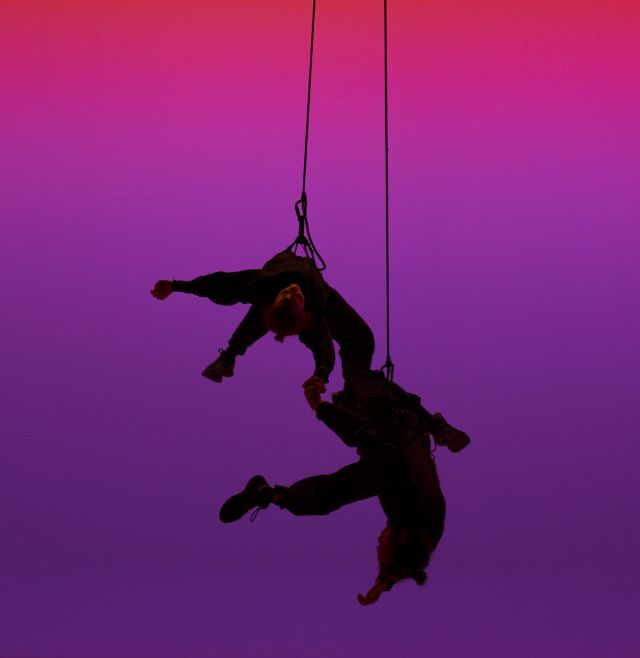
Angelica Mesiti: "What matters is imagining possible futures"
In ihrer ersten umfassenden Einzelausstellung in der Schweiz zeigt die Filmkünstlerin Angelica Mesiti fünf Videoarbeiten im Museum Tinguely. Im Zentrum steht die Frage, was Menschen jenseits von Sprache verbindet und unterscheidet. von Mirco Kaempf
26.03.25 Angelica Mesiti Reverb
Reverb heisst die Einzelausstellung der australischen Filmemacherin Angelica Mesiti, zu sehen im Museum Tinguely
Zwei Menschen tragen ein Klavier eine Treppe hinauf. Traktoren fahren über ein Weizenfeld. Ein Lauffeuer entsteht. All das sind alltägliche Szenen – doch in den Filmen der australischen Künstlerin Angelica Mesiti erhalten sie eine poetische, eindringliche Bedeutung.
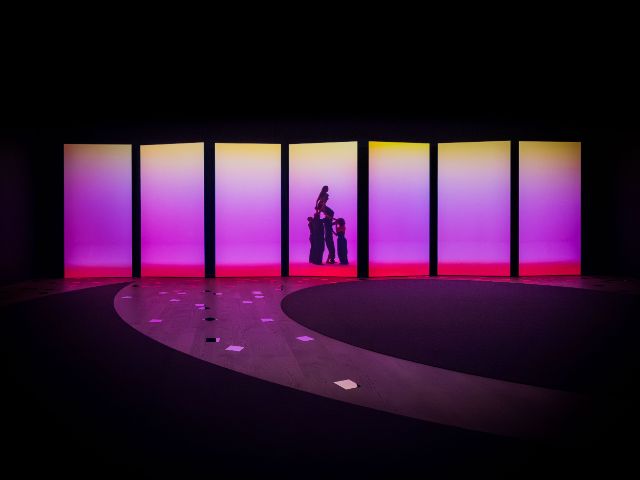
Im Zentrum steht die grossformatige Arbeit The Rites of When (2024): ein über 30-minütiger Film, präsentiert auf sieben nebeneinanderstehenden Screens. Mesiti untersucht darin, wie Menschen jenseits von Sprache miteinander verbunden sind – was uns verbindet und was uns unterscheidet.
Der Film zeigt Übergänge: vom Winter zum Frühling, von Ritualen zu modernen Lebensrealitäten. Menschen tanzen um ein Feuer, feiern den Wechsel der Jahreszeiten – während gleichzeitig sichtbar wird, wie stark sich der moderne Mensch von natürlichen Zyklen entfernt hat.
Mesiti arbeitet mit Perspektivwechseln und Zeitsprüngen: von intimen Momenten hin zu globalen Zusammenhängen. Ein ungeplanter Funke, der ein Feuer auslöst, wird so zum Sinnbild für größere Prozesse wie gesellschaftlichen Wandel und Klimaveränderungen.
Reverb ist zu sehen bis zum 30. August 2026 im Museum Tinguely
Your work moves between intimate moments and vast ideas of time. What does eternity mean to you?
Angelica Mesiti: I’m not sure I have a clear answer. Maybe the closest thing is the universe—this idea that it’s constantly expanding.
The Rites of When deals with cycles and shifting time scales. What drives that?
I think, for me personally, what matters is imagining possible futures. Reimagining the present is a big part of what drives my work. In that sense, maybe it’s less about eternity itself and more about searching for other ways of thinking and being.
There’s also a sense that time isn’t linear in your work.
Yes, I was inspired by an Indigenous Australian concept sometimes described as the “everywhen,” where past, present, and future are folded into each other. In the film, some scenes feel traditional but take place in modern settings, others could be now or a near future. I wanted to play with that idea of “when.”
Your work often feels almost anthropological—it looks at how people connect, even without a shared language. Do you think it’s more important to focus on what we share, or what makes us different?
I think both are equally important. It matters to recognize our differences, but also to acknowledge how much we share simply by being human.
Verwandte Artikel
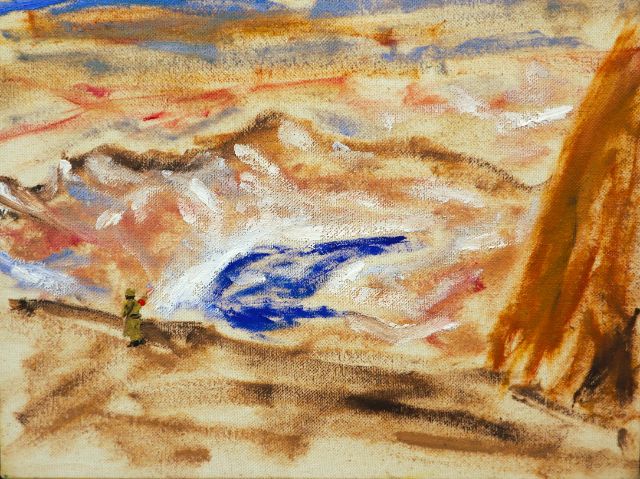
Wenn Blumen schreien: Still Leben - Laut Malen im Ausstellungsraum Klingental
Was früher von der Französischen Kunstakademie als niedere Kunst versoittet wurde, wird hier zum lauten Aufschrei: das Stillleben. In einer neuen Malerei Gruppenausstellung werden Narrative ausgeklammert und dafür Duktus und Werk in den Vordergrund gestellt. Wir sprechen mit Melissa A. Torres und Jan Kiefer über Zugänglichkeit, Intuition und politische Dringlichkeit im Pinselstrich.
.jpg/jcr:content/Design%20ohne%20Titel%20(28).jpg)
Mikrotopia: Die Materie im Fokus
Was passiert, wenn wir uns selbst einmal aus dem Mittelpunkt nehmen und die Aufmerksamkeit ganz gezielt auf die Materie lenken? Die Basler Künstlerin Franziska Baumgartner lädt im Artstübli dazu ein, das Kleine ganz gross zu sehen.
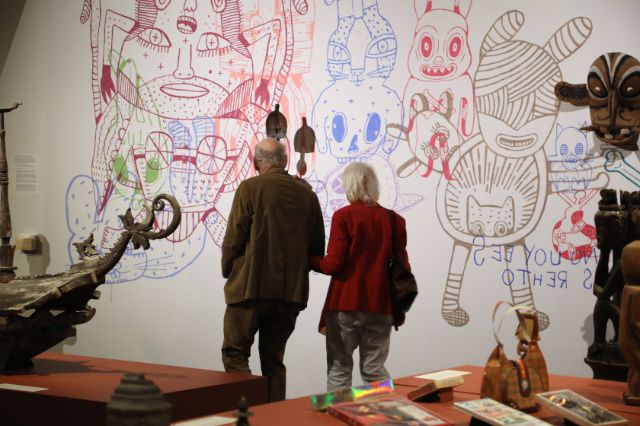
"Wisch den Tod auf dem iPhone weg"
Mit seiner Frau Ursula besuchte Franz Hohler, der vor Kurzem 83 Jahre alt wurde, die Ausstellung "Der Weg ins Jenseits" im Museum der Kulturen Basel. Im Gespräch mit Janina Labhardt berichtet er, welche Todesfälle er betrauert, wie er sich das Jenseits vorstellt und: dass er sich köstlich über makabere Witze amüsiert.
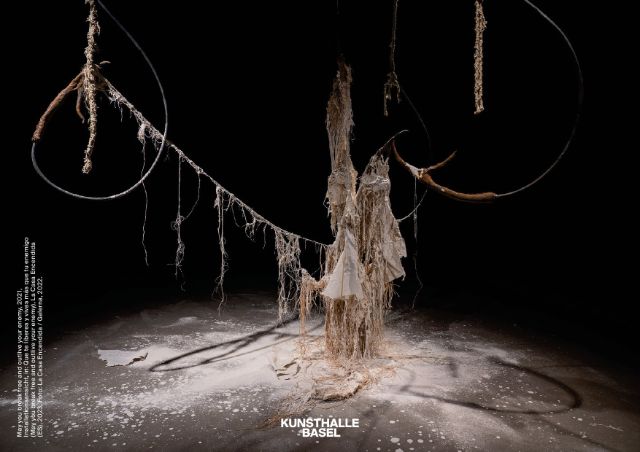
Wenn Macht zerfällt: Eine Ausstellung von Dominique White
Die britische Künstlerin Dominique White arbeitet in ihrer neuen Ausstellung "Great Powers Collapse from the Centre", in der Kunsthalle Basel mit Objekten, die Teile von einem immer weiter laufenden Prozess sind. Dabei nimmt sie sich des Begriffs «Schiffsbruch/Schiffbrüchig» an, jedoch weniger als Ende, sondern eher als Neubeginn.
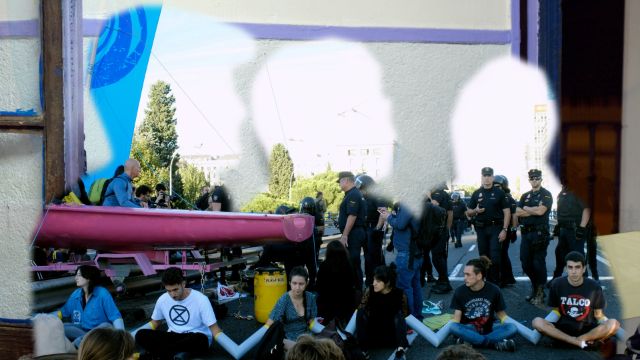
Brennende Fahnen und Barrikaden: Oliver Ressler im Tinguely Museum
Die Ausstellung «Scenes from the Invention of Democracy» im Tinguely Museum zeigt, wie eng Kunst und Aktivismus verbunden sind. Der Wiener Künstler Oliver Ressler dokumentiert weltweite Protestbewegungen und versteht Kunst als Werkzeug des Widerstands. Im Rahmenprogramm finden Diskussionen und Performances statt. Die Ausstellung läuft bis zum 1. März im Tinguely Museum Basel.

.png/jcr:content/magnolia-medium.png)